How Equipment Financing Helps Businesses Grow Without Draining Cash
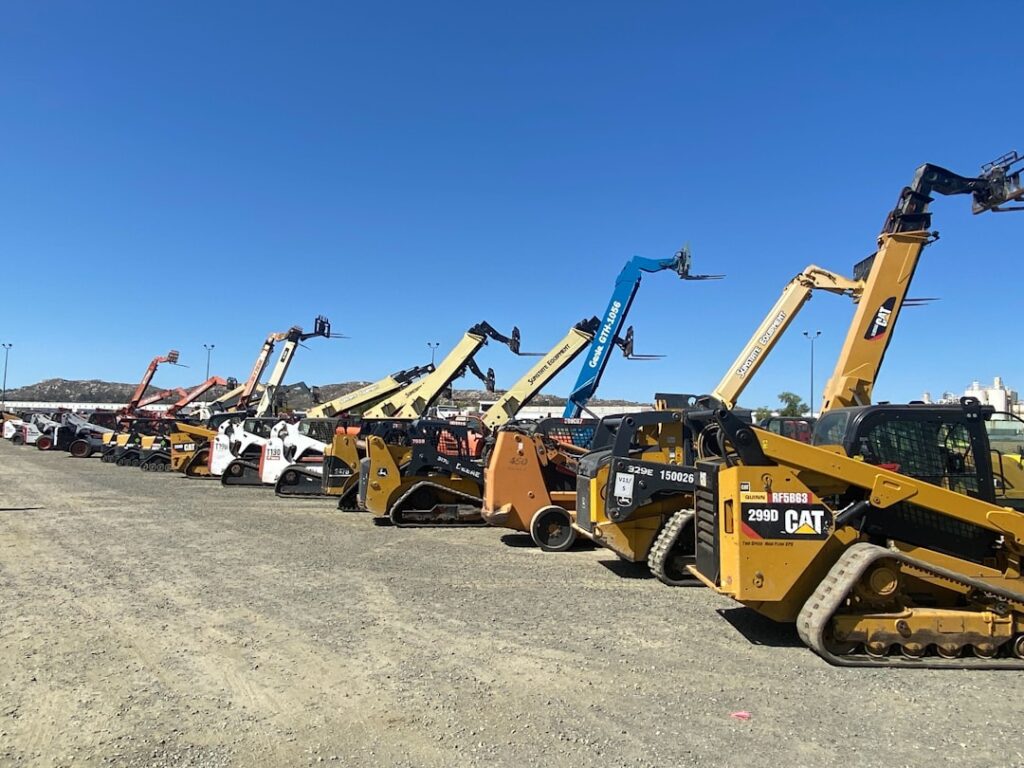
Buying new equipment can be one of the biggest challenges for a growing business. Whether it’s construction machinery, medical devices, trucks, or manufacturing tools, the cost can strain cash flow. Equipment financing through National Business Capital gives business owners a way to get what they need now while paying over time — without putting daily operations at risk. What Is Equipment Financing? Equipment financing allows a business to purchase or lease equipment and pay for it in manageable monthly payments instead of one large upfront cost. The equipment itself often serves as collateral, which can make approvals easier compared to traditional loans. This option is ideal for businesses that want to: Upgrade outdated equipment Expand operations Increase productivity Preserve working capital How National Business Capital Helps National Business Capital works with a wide network of lenders to match businesses with equipment financing options that fit their situation. Instead of approaching one lender at a time, business owners can explore multiple options through a single process. Key benefits include: Fast approvals so equipment purchases aren’t delayed Flexible terms based on the business’s cash flow Financing for new or used equipment Support from experienced funding advisors This approach helps business owners focus on growth instead of paperwork. Who Equipment Financing Is Best For Equipment financing works well for many industries, including: Construction and contracting Transportation and logistics Medical and dental practices Manufacturing and industrial businesses Landscaping and service-based companies If equipment plays a critical role in delivering your product or service, financing can be a smart growth tool. Why Partners Recommend It For referral partners like CPAs, consultants, and financial advisors, equipment financing is a practical solution to offer clients who need assets but want to protect cash reserves. It supports business expansion without increasing unnecessary financial stress. Final Thoughts Equipment financing through National Business Capital gives businesses the ability to move forward confidently — acquiring essential tools while maintaining healthy cash flow. Instead of waiting or settling for outdated equipment, business owners can invest in what they need today and pay over time. Ready to explore your options? Reach out and let’s find the right equipment financing fit for your business.
Won a Big Contract? Here’s How to Fund It Before You Get Paid

You just landed one of the biggest projects your company has ever won. At first, it feels like a major victory. The contract is signed. The revenue looks great. Your team is excited. Then reality sets in. Before the first payment arrives, you need to hire additional workers, order materials, mobilize equipment, and cover payroll. The project may be profitable, but it requires cash today while customer payments may not arrive for weeks or even months. Many contractors discover that winning a larger project creates a new challenge: having enough working capital to get the job started. The Contractor Growth Challenge One of the biggest misconceptions in business is that profitability automatically means financial stability. For contractors, that’s often not the case. A company can be profitable on paper and still experience cash flow pressure because expenses happen long before project payments are received. Common upfront costs include: Payroll for field crews and supervisors Materials and supplies Equipment rentals and transportation Permits and mobilization costs Subcontractor deposits Fuel and operating expenses As project size increases, these costs increase as well. The question becomes: If a larger contract landed on your desk tomorrow, would your current cash flow support it? Why Many Contractors Turn Down Growth Opportunities When funding is needed, many business owners immediately think of traditional bank loans. Historically, banks often required collateral such as: Real estate Heavy equipment Vehicles Other business assets For some contractors, that works. For many others, it creates challenges. Some equipment may already be financed. Some owners prefer not to put personal assets at risk. Others simply do not want to wait through lengthy approval processes while a project timeline is moving forward. As a result, many contractors pass on opportunities that could help grow their business. A Different Approach to Business Funding Today’s funding landscape offers more options than many contractors realize. Rather than focusing only on collateral, many funding programs evaluate the overall strength of the business. Factors often include: Consistent Revenue Steady monthly revenue demonstrates that the company is operating successfully and generating income. Business Cash Flow Lenders want to understand how money moves through the business and whether there is capacity to support additional financing. Time in Business A proven operating history shows experience, stability, and the ability to manage projects successfully. Project Pipeline Upcoming contracts and future opportunities can help demonstrate growth potential and the purpose behind the requested funding. For contractors with strong operations and predictable revenue, these factors may be more important than the value of physical assets. The Best Time to Explore Funding The most successful contractors usually don’t wait until they are facing a cash crunch. Instead, they explore financing options before they need them. When a major project appears, they already understand: What funding options are available How much capital they may qualify for What documentation is required How quickly funding can be accessed Preparation creates flexibility and confidence when opportunities arise. Key Takeaways Cash Flow Matters More Than Profit A profitable project can still create financial strain if expenses come due before customer payments arrive. Growth Requires Capital Larger contracts often require additional labor, materials, equipment, and working capital. Traditional Banks Are Not the Only Option Modern funding solutions may focus on business performance, revenue, and future opportunities rather than solely on collateral. Your Future Work Has Value A strong pipeline of contracts can demonstrate business strength and growth potential. Plan Before You Need Funding Understanding your options ahead of time allows you to move quickly when the right opportunity appears. Final Thoughts Many contractors don’t struggle because they lack profitable work. They struggle because growth requires cash before customers pay. The good news is that funding options have evolved. Business owners today may have access to solutions designed specifically for established companies that need capital for expansion, equipment, acquisitions, payroll, inventory, or large projects. If you’re wondering whether your business could qualify for funding, a simple conversation can often provide clarity without any obligation or pressure. Learn More: https://www.youtube.com/watch?v=SWaeEqyuvSU Devil Dog Marketplace, Proud Partner of National Business Capital Website: https://www.devildogmarketplace.com LinkedIn: https://www.linkedin.com/in/michaelfieger/ National Business Capital: https://www.nationalbusinesscapital.com Funding Application: https://www.nationalbusinesscapital.com/apply-now/?ref=5466172
It Wasn’t One Big Check: Inside a Staged Growth Financing Story
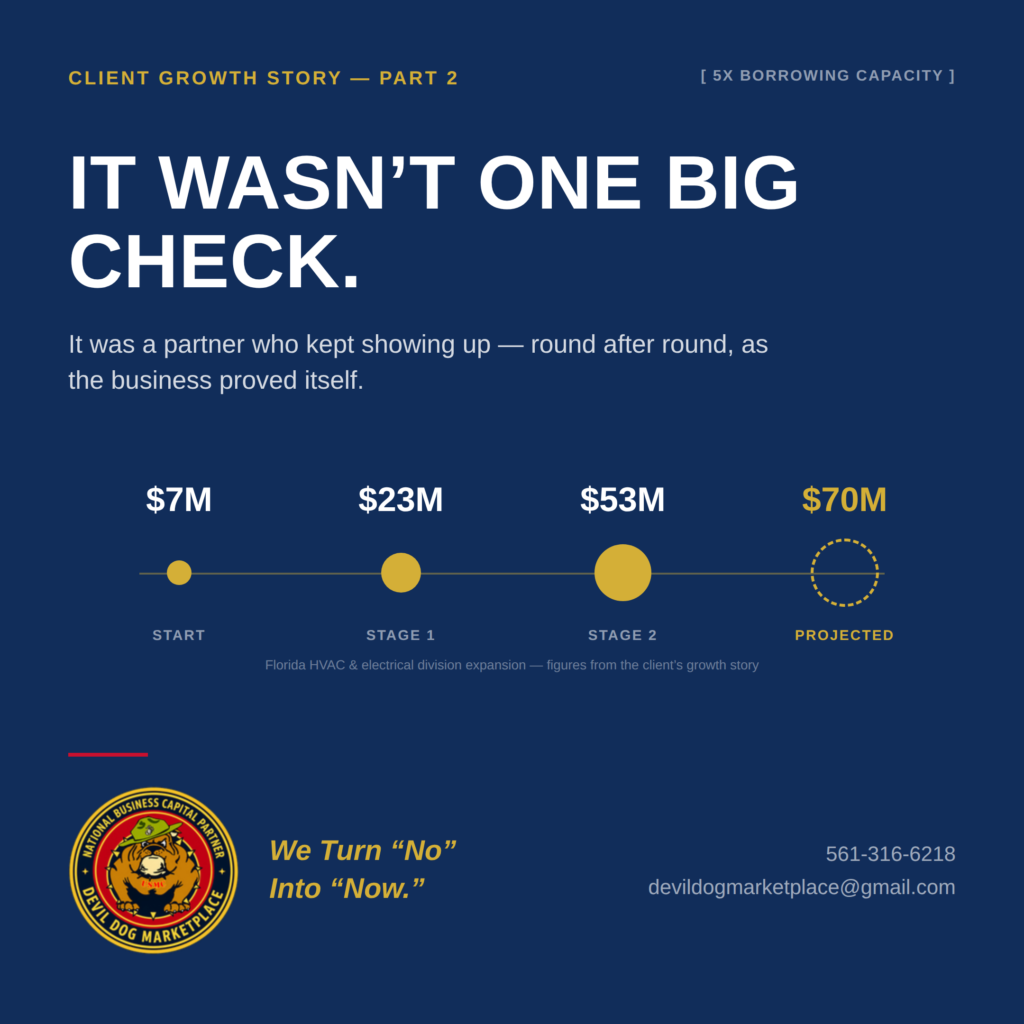
Last week I shared how a $250K loan got an HVAC owner through his slow season after a past bankruptcy had shut most lenders’ doors. What happened next is the part that stuck with me even more. Once stable, he wanted out of the seasonal cycle entirely — Florida HVAC means strong summers and quiet winters, no matter how well you run the business. He already had an electrical division. It just wasn’t big enough to carry the company through the slow months. Growing it meant more trucks, more electricians, real overhead before the revenue caught up. His lender didn’t just approve a lump sum — they staged it. Ten trucks, then twenty, then twenty more, each wave given time to settle before the next arrived. They even timed the purchases to capture a tax deduction on the equipment. The relationship scaled his borrowing capacity 5x over time. The business went from $7M to $23M to $53M, with $70M projected next. What gets me about this one is the sequencing. It wasn’t one big check — it was a partner who kept showing up as the business proved itself, round after round. If your business is working through a similar growth bottleneck, I’m glad to talk through what staged capital planning could look like for you.
How $900K in Cash Flow Financing Kept Supra’s NYC Expansion From Stalling Out

A brutal winter delayed construction on two new Supra locations by two months, creating $2 million in unplanned revenue loss. A $900,000 Cash Flow Financing facility from National Business Capital kept the restaurant group stable until both doors could finally open.
When the Bank Says No, Your Plans Don’t Have to Stop

You’re staring at a payroll spreadsheet, the bank’s approval email still hasn’t come, and a supplier is asking if they’ll get paid Monday. That hollow feeling isn’t just stress — it’s the moment more and more business owners are hitting in 2026, as traditional banks pull back and get slower, pickier, and harder to reach. Loans Aren’t Paperwork — They’re Oxygen Here’s what’s changed: cash needs don’t pause for bureaucracy. When the bank says no, or takes three weeks to say maybe, you don’t have time for a wish list of financing options. You need a clear path that matches what you actually need — the amount, the timing, the reason — to capital that can move fast. The Real Gap Isn’t Your Business — It’s How the Ask Was Framed Name the objective. Name the number. Name the deadline. Do that, and you stop waiting on a bank’s timeline and start moving on your own. A Conversation, Not a Pitch Michael Fieger and Devil Dog Marketplace, a proud partner of National Business Capital, help business owners navigate exactly this. No pressure, no pitch — if the bank said no and you’re not sure what’s next, that’s a conversation worth having.
Letting Go of What No Longer Serves Your Growth

One of the toughest realities in business is realizing that not everything that helped you get here will help you get where you want to go next. Many business owners continue investing time, money, and energy into customers, services, partnerships, or processes simply because they’ve been part of the business for a long time. The history creates a sense of loyalty. After all, these relationships and decisions may have played an important role in your growth. But business isn’t built on history alone. It’s built on what creates value today and what positions you for tomorrow. You may have clients who were once ideal but now require more effort than the revenue they generate. You may have services that used to be profitable but have become distractions from larger opportunities. You may even have systems, vendors, or partnerships that no longer align with the direction you’re heading. That doesn’t mean they were mistakes. It simply means your business has grown. Healthy businesses regularly take a step back and ask difficult questions: – What’s generating the greatest return on our time and resources? – What’s helping us move forward? – What’s consuming energy without creating meaningful results? – If we were starting this business today, would we make the same decisions? The most successful companies aren’t afraid to make adjustments. They understand that growth often requires refining priorities, reallocating resources, and creating space for new opportunities. Cash flow is limited. Time is limited. Attention is limited. Where you invest those resources has a direct impact on the future of your business. Sometimes growth isn’t about doing more. Sometimes it’s about having the courage to let go of what’s no longer serving your goals so you can focus on what will. To your growth and success,