How Equipment Financing Helps Businesses Grow Without Draining Cash
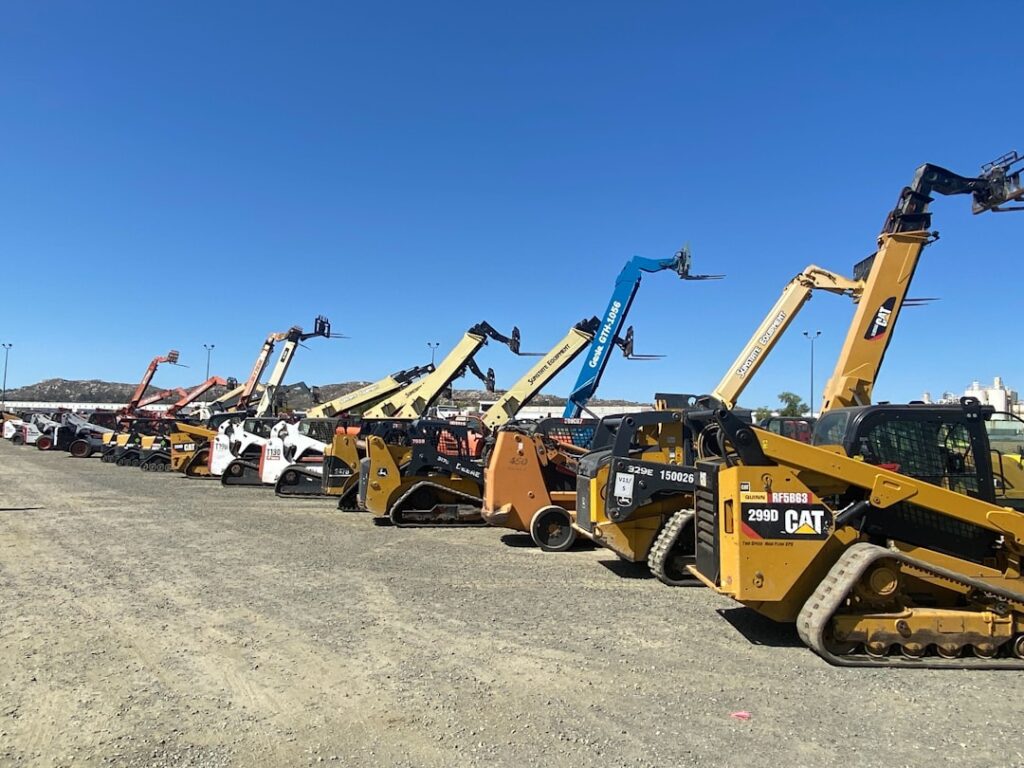
Buying new equipment can be one of the biggest challenges for a growing business. Whether it’s construction machinery, medical devices, trucks, or manufacturing tools, the cost can strain cash flow. Equipment financing through National Business Capital gives business owners a way to get what they need now while paying over time — without putting daily operations at risk. What Is Equipment Financing? Equipment financing allows a business to purchase or lease equipment and pay for it in manageable monthly payments instead of one large upfront cost. The equipment itself often serves as collateral, which can make approvals easier compared to traditional loans. This option is ideal for businesses that want to: Upgrade outdated equipment Expand operations Increase productivity Preserve working capital How National Business Capital Helps National Business Capital works with a wide network of lenders to match businesses with equipment financing options that fit their situation. Instead of approaching one lender at a time, business owners can explore multiple options through a single process. Key benefits include: Fast approvals so equipment purchases aren’t delayed Flexible terms based on the business’s cash flow Financing for new or used equipment Support from experienced funding advisors This approach helps business owners focus on growth instead of paperwork. Who Equipment Financing Is Best For Equipment financing works well for many industries, including: Construction and contracting Transportation and logistics Medical and dental practices Manufacturing and industrial businesses Landscaping and service-based companies If equipment plays a critical role in delivering your product or service, financing can be a smart growth tool. Why Partners Recommend It For referral partners like CPAs, consultants, and financial advisors, equipment financing is a practical solution to offer clients who need assets but want to protect cash reserves. It supports business expansion without increasing unnecessary financial stress. Final Thoughts Equipment financing through National Business Capital gives businesses the ability to move forward confidently — acquiring essential tools while maintaining healthy cash flow. Instead of waiting or settling for outdated equipment, business owners can invest in what they need today and pay over time. Ready to explore your options? Reach out and let’s find the right equipment financing fit for your business.
Emergency Funding vs. Bridge Capital: How to Tell Which One Your Business Actually Needs
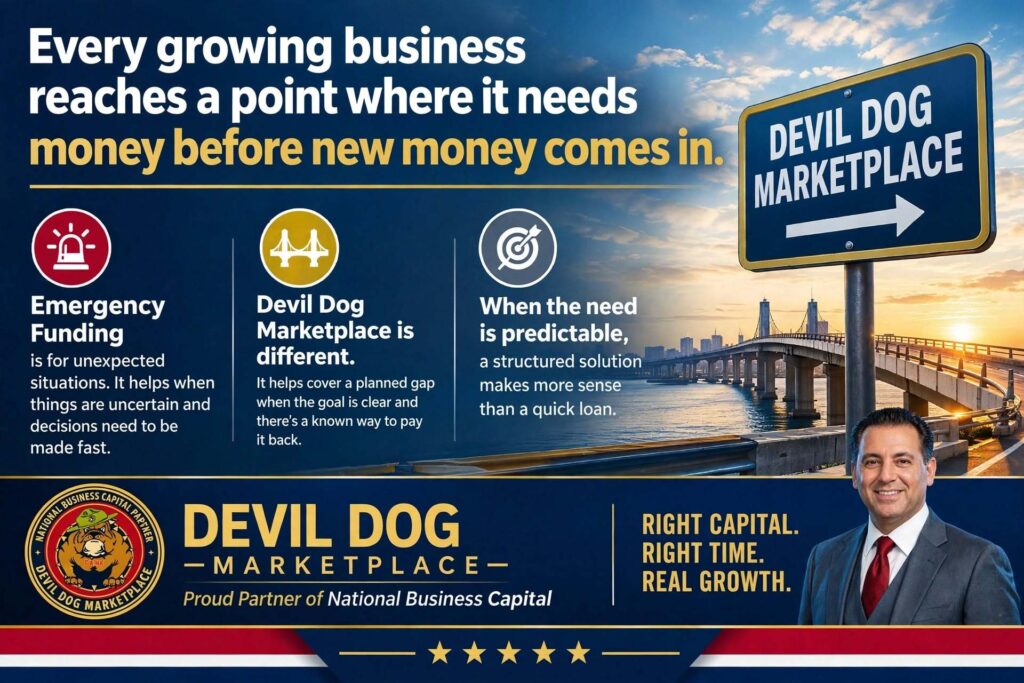
Not every cash-flow gap means something’s wrong. Sometimes it just means the timing hasn’t caught up yet. I get calls from business owners who think they need “emergency funding,” and by the time we’ve talked it through, what they’re actually describing isn’t an emergency at all. It’s a gap they already saw coming — a retailer’s purchase order, a sale that’s 60 days from closing, inventory that has to be paid for before the season’s revenue lands. They already know the money is coming. They just need something to cover the space between now and then. What Emergency Funding Is Actually For Emergency funding exists for the moment nobody saw coming. A piece of equipment fails and stops production. A client pays 45 days late and payroll’s due Friday. Something forces a fast decision while you’re still figuring out what happened. In situations like that, speed matters more than structure — the goal is stability, not strategy. What Bridge Capital Is Actually For Bridge capital solves a different problem. The objective is already clear, and so is how it gets repaid. That could look like: Covering payroll and operating costs ahead of a receivable you’re already owed Funding inventory before a seasonal or retail sales cycle Bridging a transaction while permanent financing is being finalized Managing the timing gap between an investment and the proceeds it will generate None of that is a crisis. It’s math with a known ending — you just need the right capital to get from point A to point B without stalling out in between. The Question I Ask First Before we ever get into rates or structure, this is what I want to understand: did this catch you off guard, or did you already see it coming? That answer changes everything about what kind of funding actually fits — and it’s usually more revealing than the number itself. Why This Distinction Matters Getting this wrong costs business owners more than they realize. Treating a predictable, plannable gap like an emergency often means paying emergency-level pricing for a problem that didn’t need to be urgent. And treating a genuine emergency like a planned transaction can mean losing precious time you don’t have. At Devil Dog Marketplace, in partnership with National Business Capital, we work through both situations regularly — with the speed to move fast when something’s genuinely urgent, and the flexibility to structure something more deliberate when the timeline allows for it. Every deal we fund also contributes to Feeding America, so growing your business supports a cause bigger than the transaction itself. If you’re staring at a gap right now, ask yourself the same question I’d ask on a call: is this the surprise kind, or the kind you already saw coming? Once you know the answer, we can talk about what actually fits.
Cash Flow Financing 101: What It Is and When It’s the Right Move

Not every business needs a term loan. If your revenue is steady but your collections are slow — Net 60, Net 90, or longer — the right tool is often Cash Flow Financing, not a traditional multi-year loan. Here’s the plain-English version: Cash Flow Financing is short-term capital sized and structured around your business’s actual cash conversion cycle, not a fixed collateral value or a rigid five-year amortization schedule. It’s designed to bridge the exact gap that trips up a lot of otherwise-healthy businesses — the time between when you have to pay (payroll, materials, vendors) and when you actually get paid (milestone billing, invoice terms, seasonal collections). Who tends to qualify fastest? Businesses with predictable deposits and repeatable revenue patterns — even if their paperwork isn’t perfectly polished. Underwriting for this type of financing looks less at a stack of documentation and more at what your bank statements actually show: consistent cash moving through the business. That’s a meaningful distinction. A lot of business owners assume a less-than-perfect credit file or incomplete paperwork disqualifies them. In reality, strong, consistent cash flow can get you funded faster than a business with cleaner paperwork but choppier revenue. When does this beat a term loan? If your funding need is tied to a recurring, cyclical gap — contractors waiting on milestone payments, seasonal businesses ramping up inventory, service businesses billing on Net 60/90 — Cash Flow Financing is usually the more natural fit than a long-term, fixed-structure loan. If you’re not sure which type of capital actually fits your situation, that’s a conversation worth having before you apply for anything. We’re happy to walk through it with you.
Unlocking Growth Potential Through Capital: What You Need to Know
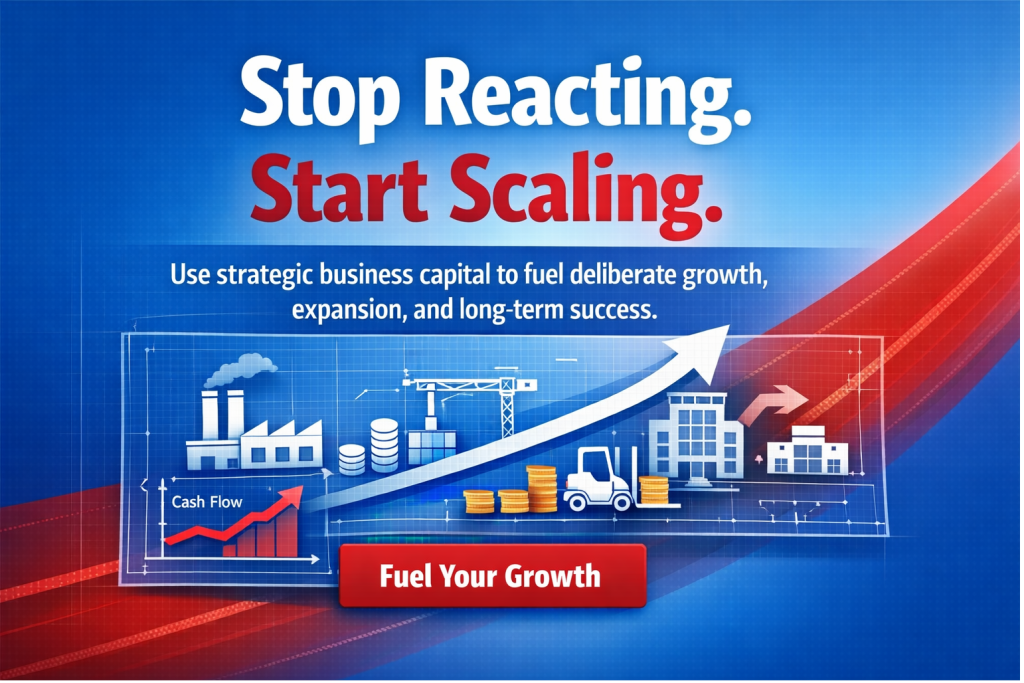
The companies that grow intentionally don’t wait for cash problems to show up. Discover why “Strategic Red” — deliberate, planned capital use — is the difference between surviving and thriving.