How $900K in Cash Flow Financing Kept Supra’s NYC Expansion From Stalling Out

A brutal winter delayed construction on two new Supra locations by two months, creating $2 million in unplanned revenue loss. A $900,000 Cash Flow Financing facility from National Business Capital kept the restaurant group stable until both doors could finally open.
Client Success: How Caldwell Contracting Funded a Full Spring Season in Days

When Caldwell Contracting Corp headed into their busy season, they had six to eight active projects starting at once — contract values ranging from $600K to $5M each. That’s a good problem to have, but it’s still a problem: payroll, materials, supplies, and transportation all had to be funded up front, while collections followed milestone-based Net 60 to Net 90 payment cycles. The opportunity was there. The season was moving faster than the cash conversion cycle. What made Caldwell’s file strong wasn’t complicated. Fourteen years in business. Strong credit. Predictable deposits. Repeatable contract flow. Those are exactly the markers that carry more weight when credit conditions tighten — but the performance history alone wasn’t the holdback. Underwriting timing was. That’s what made a reduced-documentation review the right path. Rather than restarting underwriting from zero, Caldwell secured $500K in Cash Flow Financing structured around the strength already built into their file. With that capital in place, Caldwell was able to cover upfront payroll, materials, supplies, and transportation; start multiple spring contracts on time; support active project mobilization across a busy seasonal ramp-up; and move forward without waiting on milestone-based collections. The lesson here isn’t really about Caldwell specifically — it’s about what their file represented. When a business has already proven its strength through tenure, credit, and consistent revenue, the right capital path recognizes that instead of asking the business to prove it all over again. In a seasonal industry like construction, that distinction is the difference between a season that ramps up on schedule and one that stalls waiting on paperwork.
Master Business Growth: Bridge Gaps with Precision Solutions! 🚀

Most deals don’t fail because they’re bad deals; they fail due to a gap in what a business has and what it needs to close. At Devil Dog Marketplace, we help businesses bridge this gap with precision. We categorize these gaps as manpower, equipment, or working capital timing. Each requires a tailored solution: a term loan, a line of credit, or subordinated debt behind your existing lender. The challenge isn’t the deal itself; it’s about pairing the right capital with the right gap. Let’s tackle these gaps together and ensure your business thrives. Which gap tends to slow your deals down most? Share with us below! 👇 #BusinessGrowth #VeteranOwned #CapitalSolutions #SuccessDriven 🍀
Cash Flow Financing 101: What It Is and When It’s the Right Move

Not every business needs a term loan. If your revenue is steady but your collections are slow — Net 60, Net 90, or longer — the right tool is often Cash Flow Financing, not a traditional multi-year loan. Here’s the plain-English version: Cash Flow Financing is short-term capital sized and structured around your business’s actual cash conversion cycle, not a fixed collateral value or a rigid five-year amortization schedule. It’s designed to bridge the exact gap that trips up a lot of otherwise-healthy businesses — the time between when you have to pay (payroll, materials, vendors) and when you actually get paid (milestone billing, invoice terms, seasonal collections). Who tends to qualify fastest? Businesses with predictable deposits and repeatable revenue patterns — even if their paperwork isn’t perfectly polished. Underwriting for this type of financing looks less at a stack of documentation and more at what your bank statements actually show: consistent cash moving through the business. That’s a meaningful distinction. A lot of business owners assume a less-than-perfect credit file or incomplete paperwork disqualifies them. In reality, strong, consistent cash flow can get you funded faster than a business with cleaner paperwork but choppier revenue. When does this beat a term loan? If your funding need is tied to a recurring, cyclical gap — contractors waiting on milestone payments, seasonal businesses ramping up inventory, service businesses billing on Net 60/90 — Cash Flow Financing is usually the more natural fit than a long-term, fixed-structure loan. If you’re not sure which type of capital actually fits your situation, that’s a conversation worth having before you apply for anything. We’re happy to walk through it with you.
Bank Said No? Here’s Why That’s Not the End of Your Funding Story

For a lot of business owners, a bank decline feels final. But in our experience, it’s rarely the end of the story — it’s usually just a sign that one lender’s box didn’t fit your business. Take a fragrance manufacturer we recently worked with. Their senior lender turned them down right as major retailers placed enterprise-level orders — exactly the wrong moment for a “no.” We stepped in with $15M in strategic capital so production never stopped. Or the trucking company that needed cash fast to fund two new contracts. Their bank passed. We didn’t. They had $300K in hand within 48 hours. Banks lend on rules: fixed formulas, rigid credit boxes, slow committees. We lend on reality — your cash flow, your growth trajectory, and where your business is actually headed. That’s why we work with 75+ lenders instead of one, so there’s almost always a fit somewhere. If your bank has said no — or you’re worried they will — that doesn’t mean your growth plans are on hold. It usually just means it’s time for a different kind of conversation. Ready to see what’s possible? Apply in one minute at devildogmarketplace.com or call us directly. Semper Fi.
Strong Revenue but No Cash? How Advisors Solve Payroll Problems
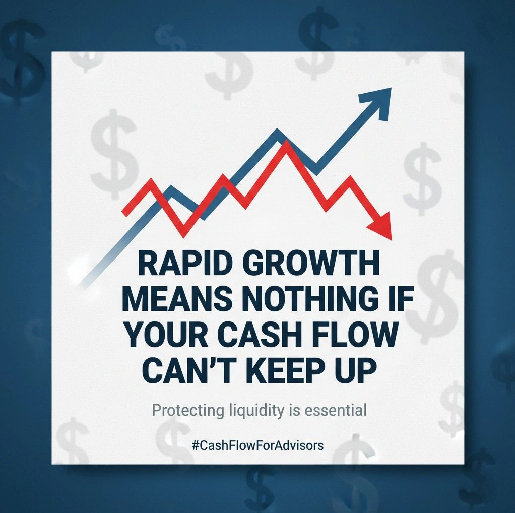
Ever Had a Client Who Looks Great on Paper- but Is Scrambling to Make Payroll? Quick summary: Some businesses look successful on paper but still struggle to pay employees. This happens when cash flow can’t keep up with growth. Smart advisors help clients spot these gaps early and use flexible funding to stay stable. This happens more often than most people think. A business can look very successful from the outside. Sales are high. Revenue is growing. Reports look strong. But behind the scenes, the owner is worried. Cash is tight. Payroll is stressful. Bills are piling up. If you’re a CPA or business advisor, you’ve likely seen this before. Let’s break it down in a simple way — why this happens, why banks often don’t help, and what smart advisors do instead. Revenue and Cash Flow Are Not the Same This is the biggest misunderstanding in business. Revenue is how much money a business earns. Cash flow is how much money is actually available right now. A business can make a lot of money on paper but still struggle to pay employees. Why? Because cash can get stuck. Common Reasons Cash Flow Gets Tight Even healthy businesses can run into cash problems because of: Customers who pay late Seasonal ups and downs Hiring new employees too fast Buying equipment or inventory Growing faster than cash can support Payroll doesn’t wait. Rent doesn’t wait. Vendors don’t wait. A Real Example From a CPA Partner A CPA reached out last month about a client. The business was doing record sales. But cash flow was still negative. Customers were slow to pay. Growth costs were adding up. Payroll was becoming stressful. The numbers looked fine. The stress was very real. Why Banks Often Don’t Help in Time When cash flow is tight, banks are usually slow. They often require: A lot of paperwork Strong credit history Long approval times By the time a bank gives an answer, payroll is already due. That delay can hurt the business. A Better Option: Flexible Business Funding Instead of sending the client to a bank, we focused on speed and flexibility. The goal was simple: Cover payroll Keep the business running Give customers time to pay their invoices Reduce stress for the owner The funding helped bridge the gap. Employees were paid. The business stayed open. Why This Matters for Advisors Business owners don’t just want reports. They want peace of mind. Advisors who help protect cash flow: Build trust Strengthen relationships Become long-term partners Helping a client survive a tough moment matters more than any spreadsheet. Simple Questions Advisors Should Ask These questions can reveal problems early: Do you always have enough cash for payroll? What happens if customers pay late? How many weeks could you operate if cash slowed down? Do you have a backup plan for cash flow gaps? Simple questions can prevent big problems. The Bottom Line Growth is exciting. But growth without cash can be dangerous. Cash flow keeps businesses alive. Advisors who help clients stay liquid, calm, and prepared become trusted partners — not just service providers. So here’s the big question: When cash flow gaps show up, what’s your go-to move? What This Means for You If you work with business owners, cash flow issues will come up — even when revenue looks strong. Having a plan before payroll stress hits can: Protect your client Reduce panic decisions Strengthen long-term trust If you’re an advisor who wants a faster, simpler way to help clients bridge cash flow gaps, flexible funding options can make a real difference. Ready to build a capital strategy that fuels growth? Refer a client to National Business Capital Partner Michael Fieger today and help them scale with confidence.