It Wasn’t One Big Check: Inside a Staged Growth Financing Story
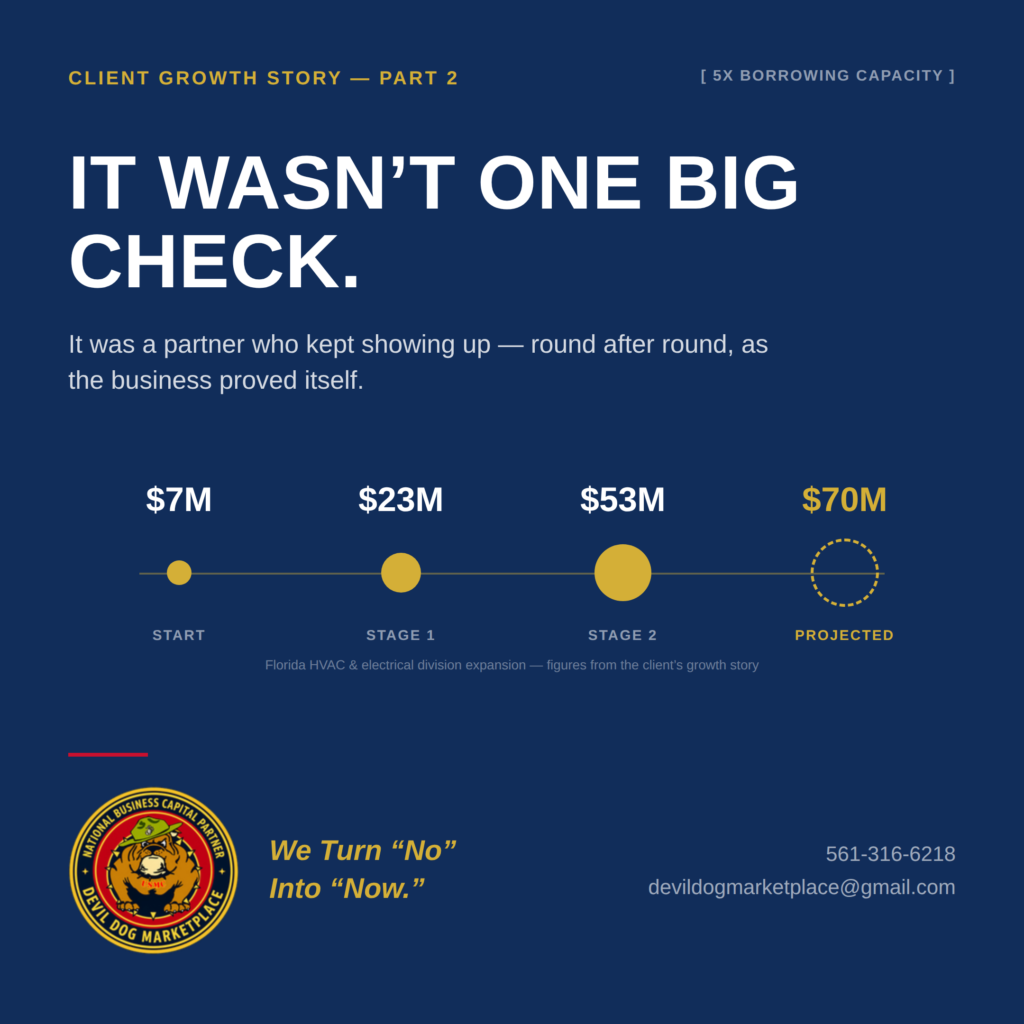
Last week I shared how a $250K loan got an HVAC owner through his slow season after a past bankruptcy had shut most lenders’ doors. What happened next is the part that stuck with me even more. Once stable, he wanted out of the seasonal cycle entirely — Florida HVAC means strong summers and quiet winters, no matter how well you run the business. He already had an electrical division. It just wasn’t big enough to carry the company through the slow months. Growing it meant more trucks, more electricians, real overhead before the revenue caught up. His lender didn’t just approve a lump sum — they staged it. Ten trucks, then twenty, then twenty more, each wave given time to settle before the next arrived. They even timed the purchases to capture a tax deduction on the equipment. The relationship scaled his borrowing capacity 5x over time. The business went from $7M to $23M to $53M, with $70M projected next. What gets me about this one is the sequencing. It wasn’t one big check — it was a partner who kept showing up as the business proved itself, round after round. If your business is working through a similar growth bottleneck, I’m glad to talk through what staged capital planning could look like for you.
The Capital Gap Framework: Why Good Deals Stall and How to Close Them

Most deals that stall don’t stall because they’re bad deals. They stall because of a gap — the difference between what a business has on hand right now and what it needs to actually close. That gap shows up in a few recognizable forms: Manpower gaps — you’ve won the work, but don’t have the staffing in place yet to execute it without straining the team you have. Equipment gaps — the contract requires equipment or inventory up front, before the revenue from that contract starts coming in. Working capital timing gaps — your business is fundamentally healthy, but payroll, materials, and vendors are due now while collections are tied to Net 60/90 terms or milestone billing. None of these are a sign the deal is bad. They’re a sign the timing between cost and revenue doesn’t line up — and that’s a solvable problem, not a disqualifying one. The key is matching the right instrument to the specific gap. A manpower or equipment gap tied to a single large opportunity often calls for a term loan or equipment financing. A recurring working capital timing gap is usually better suited to a line of credit or cash flow financing. A gap that shows up during an acquisition or expansion, where you already have a primary lender in place, might call for subordinated debt structured behind that existing relationship. The businesses that move fastest through this process are the ones that can clearly articulate which gap they’re dealing with. If you’re not sure which category your situation falls into, that’s exactly the kind of conversation worth having before you apply for anything specific.
Unlocking Growth Potential Through Capital: What You Need to Know
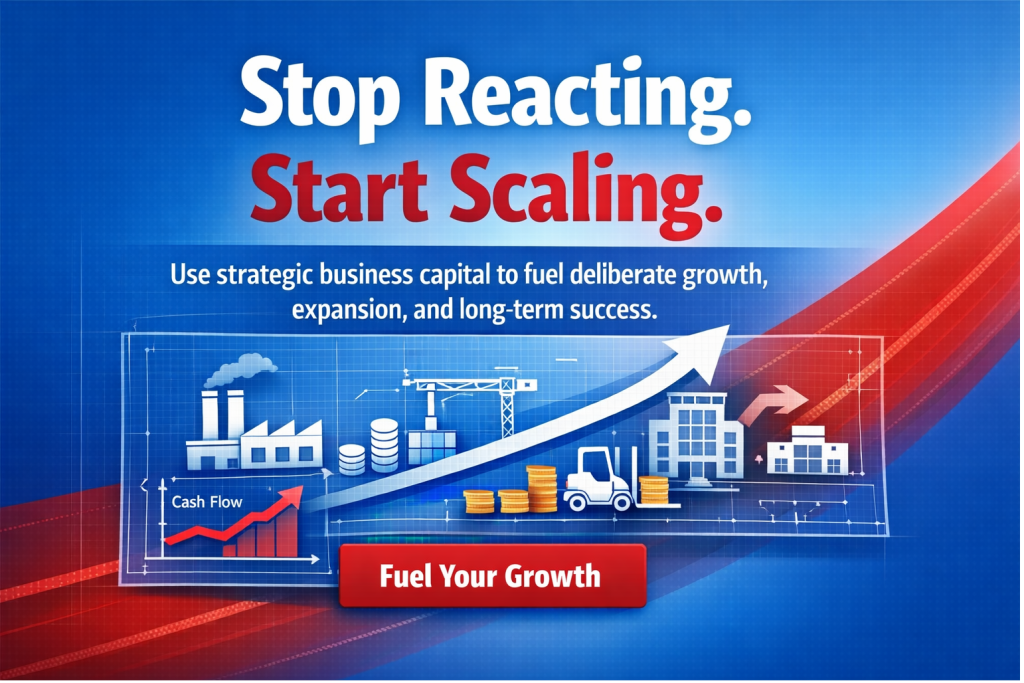
The companies that grow intentionally don’t wait for cash problems to show up. Discover why “Strategic Red” — deliberate, planned capital use — is the difference between surviving and thriving.