I Didn’t Learn Growth Capital From a Textbook. I Learned It Leading Marines.
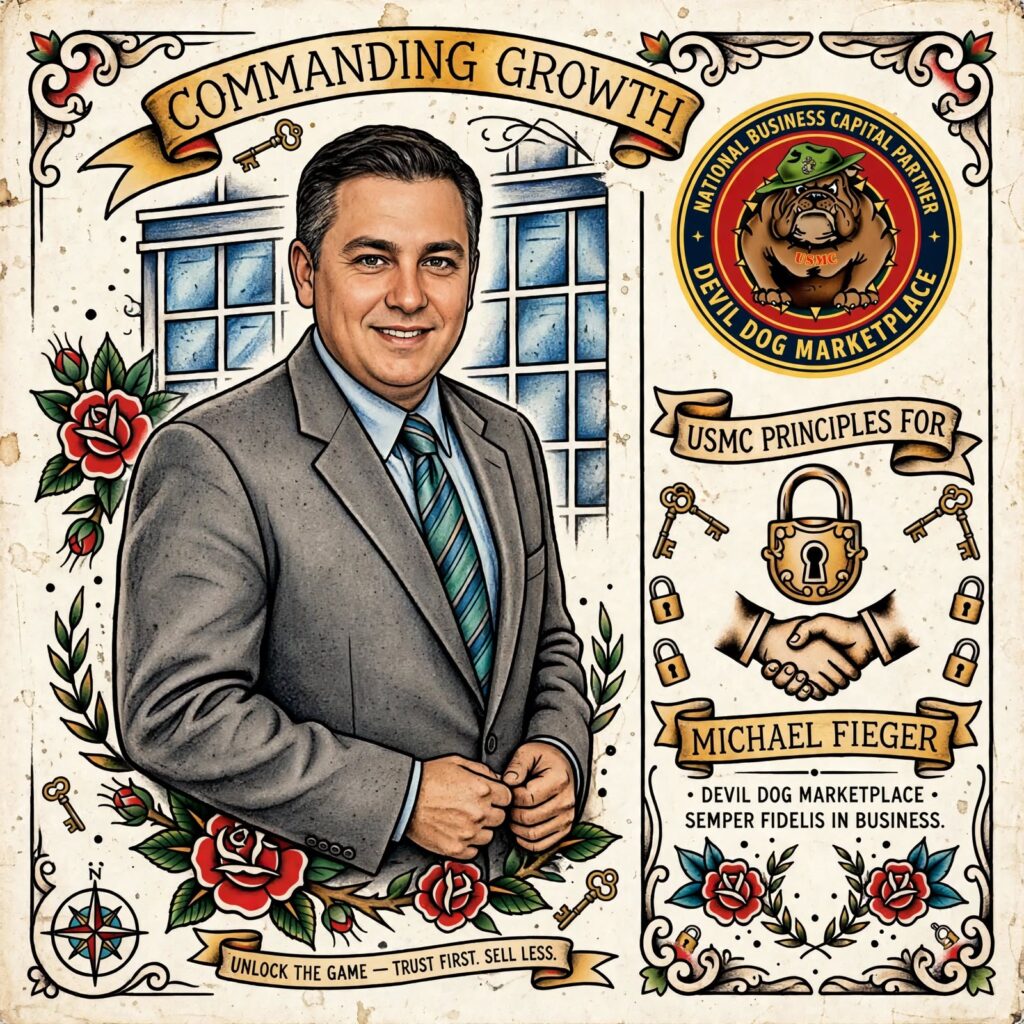
Six years in the Marine Corps taught me something no finance course, MBA program, or banking seminar ever could: trust is earned before you ever ask for anything. As a squad leader with 2nd Battalion, 6th Marines, the job wasn’t to convince anyone to follow me. It was to earn it — every day, before it mattered, so that when it did matter, there was no hesitation. That lesson didn’t stay in the Corps. It became the foundation of how I’ve run every business relationship since. The Moment That Changed How I Sell In 2006, I came across a program by a man named Ari Galper called “Unlock The Game,” and it completely upended how I thought about selling. Up to that point, I sold the way most people are trained to sell — pressure, pitch, close. It worked, but it never felt right, and it rarely built anything that lasted. Ari’s approach was the opposite. Stop trying to convince people. Start actually listening to them. Ask about their business, their obstacles, their real situation — before you ever mention what you do. If it’s not the right fit, say so, even if it costs you the deal. That single shift changed the trajectory of my career. How That Shows Up Today As a Partner with National Business Capital, that principle runs through everything I do: Trust first. I ask about your business before I ever mention a product. Sell less. If it’s not the right fit, I’ll tell you — even if that costs me the deal. Move fast when it counts. National Business Capital has funded over $3 billion for more than 50,000 businesses nationwide across 15+ years, connecting qualified companies with fast, flexible funding solutions through a trusted network of private lenders. The Story I Hear Most Often Every business owner I talk to has a version of the same story: a bank that moved too slowly, or a “no” that came down to a credit score that never told the full picture of the business. I’ve sat across that conversation more times than I can count, and I’ve learned that the businesses getting turned away by traditional banks are often the ones with the strongest fundamentals — they just don’t fit inside a rigid box. If that sounds like where you are right now, I’d genuinely like to talk. Not a pitch. A conversation — about your business, where it’s headed, and whether there’s a way I can help you get there faster. A Principle, Not a Slogan Adapt. Improvise. Overcome. It’s a phrase every Marine knows, and it’s not a slogan for me — it’s how I run Devil Dog Marketplace and how I show up for every business owner I work with. Every deal we help fund also contributes to Feeding America, so growth capital does double duty — helping your business move forward while helping provide meals to families in need. If you’re ready for a real conversation about growth capital, reach out. Semper Fi.
How Business Funding Can Strengthen Your Exit Strategy
Most business owners think about financing as a way to solve short-term cash flow challenges. Used strategically, though, capital can play a much bigger role — increasing the value of a business years before an eventual sale, succession, or transition. A successful exit rarely happens by accident. Buyers are looking for strong financial performance, scalable operations, diversified revenue, modern equipment, documented processes, and consistent growth. Getting there usually requires investment made long before an owner starts thinking about exiting. ## Why Funding Matters Access to capital gives owners the resources to make the improvements that increase a business’s attractiveness and value. Rather than waiting until the last minute, owners who invest in growth and operational improvements years ahead of an exit tend to land better outcomes. Funding can be used to: – Expand into new markets – Hire key employees and leadership talent – Upgrade equipment and technology – Increase inventory to support growth – Acquire competitors or complementary businesses – Strengthen marketing and customer acquisition – Improve operational efficiency and profitability – Reduce owner dependence through documented systems and processes ## What Buyers Look For Buyers are typically drawn to businesses that show: – Consistent revenue growth – Strong cash flow – Scalable operations – A reliable management team – A diversified customer base – Modern systems and infrastructure – Clear opportunities for future growth Strategic investment made before an exit can strengthen most of these areas directly. ## Planning Ahead Creates Options Whether an owner plans to sell in three years or ten, access to growth capital creates flexibility. The goal isn’t simply to borrow money — it’s to invest in the initiatives that increase enterprise value and create more options down the road. A well-funded growth strategy can help owners: – Increase business valuation – Improve marketability to buyers – Create succession opportunities – Strengthen negotiating leverage – Maximize proceeds at exit ## The Bottom Line The most successful exits are usually the result of years of preparation. Strategic funding, used to support growth and build long-term value, is one of the most underused tools in that preparation. Instead of treating financing as a short-term fix, it’s worth viewing capital as an investment in your company’s future value — and your eventual exit. ## Frequently Asked Questions **When should I start preparing my business for an exit?** Most advisors recommend starting 3-5 years before a planned sale or succession — enough time for growth investments and operational improvements to actually show up in the numbers a buyer evaluates. **Does taking on funding before a sale hurt my valuation?** Not when it’s used to build enterprise value — hiring leadership, upgrading systems, documenting processes. Debt used for growth is evaluated differently than debt used to cover shortfalls. **What do buyers weigh most heavily?** Consistent revenue growth, strong cash flow, a business that doesn’t depend on the owner personally, and a diversified customer base.
Ghosted After Signing? What a Trustworthy Funding Partner Actually Looks Like

If a broker disappeared on you after closing — stopped answering calls, went silent the moment the deal was done — you’re not being paranoid by being cautious now. You’re being smart. Here’s what a trustworthy funding partner actually looks like. What sets a real partner apart: They’re still reachable after the deal closes. If your questions post-funding get the same responsiveness as your questions pre-funding, that’s a real signal — not a coincidence. They explain the “why,” not just the “what.” A trustworthy advisor walks you through why a specific structure fits your situation, not just what the numbers are. They tell you when something isn’t a fit. If every conversation ends in a “yes, let’s do this deal,” be cautious. A real partner will sometimes tell you to wait, or that a different option makes more sense. Their explanations don’t change depending on who’s asking. Consistency between what you’re told and what’s actually in the paperwork is non-negotiable. They have a track record you can actually verify. Real client outcomes, real longevity, real reputation — not just promises made during the pitch. Why this matters more than the rate The cheapest deal from someone who disappears the moment you have a problem often costs more in the long run than a slightly higher rate from someone who actually stays in your corner. Speed: Fast doesn’t have to mean rushed or unaccountable — we move quickly and stay reachable. Flexibility: We work with businesses who’ve been burned before and are rightly cautious now. Transparency: What we tell you upfront is what you’ll see in the paperwork — no gap between the two. And every deal we fund contributes to Feeding America — a partnership that creates impact beyond the transaction itself. Been burned before? Let’s show you what a real partnership looks like.
How to Spot a Predatory MCA Stack Before It’s Too Late

A merchant cash advance can be a legitimate tool — but “stacking” multiple advances on top of each other has ended more businesses than almost any other financing mistake. Here’s how to spot the warning signs before you sign. Warning signs of a predatory MCA stack: Daily or weekly automatic withdrawals that don’t flex with your revenue. A legitimate advance should account for slow periods. If the withdrawal amount is fixed regardless of what you bring in, a bad month can spiral fast. You’re offered a new advance to pay off an existing one. This is the single clearest sign of stacking — it doesn’t solve a cash flow problem, it compounds it. The effective interest rate isn’t clearly disclosed. If a lender can’t or won’t give you a straight answer on the true cost of the advance, that’s a signal to walk away. Pressure to sign quickly, without time to review terms. Urgency tactics are a red flag in any lending relationship — a legitimate partner gives you room to understand what you’re agreeing to. Multiple advances from different providers, each unaware of the others. Once you’re juggling several daily withdrawals against the same revenue, the math stops working — regardless of how promising each individual deal looked. What to do instead If you’re already in a stack, consolidation through a single, structured facility can often replace multiple daily withdrawals with one manageable payment — stabilizing cash flow instead of starving it. Speed: We can assess a stacking situation and outline options within 24-48 hours. Flexibility: We work with businesses already in a difficult MCA position, not just clean-slate applicants. Transparency: We’ll walk you through the real math — no fine print, no surprises. And every deal we fund contributes to Feeding America — even recovery can create impact beyond your own business. If something about your current financing feels off, let’s take an honest look together.
What Type of Funding Actually Fits Your Business? A 5-Question Self-Assessment

With so many funding options available, the hardest part often isn’t qualifying — it’s knowing what to even ask for. These five questions will point you in the right direction. Ask yourself: Is this a one-time cost or an ongoing need? One-time points toward a term loan or equipment financing. Ongoing or unpredictable points toward a line of credit. Do I know the exact dollar amount I need? A specific number suggests a term loan. An uncertain, fluctuating need suggests a flexible line of credit. Am I financing equipment, inventory, or general operations? Equipment and vehicles often qualify for financing where the asset itself is collateral — usually faster and more favorable terms than general working capital. Do I have outstanding invoices from reliable customers? If so, invoice factoring may unlock cash you’re already owed, without taking on new debt. How fast do I need the funds? If it’s urgent — days, not weeks — that narrows your options considerably and should shape the conversation from the start. Why this self-assessment works Most confusion in funding comes from being pitched a product before anyone understands the actual need. Answering these five questions first puts you in control of the conversation instead of reacting to whatever’s offered. Speed: Once you know what you need, we can move on a real answer in 24-48 hours. Flexibility: We match the funding type to your actual answers — not a one-size-fits-all pitch. Transparency: We’ll walk through your answers with you and explain exactly why a given option fits. And every deal we fund contributes to Feeding America — clarity that creates impact beyond your business. Answered these five questions? Let’s talk through what they point to.
Stop Assuming You’re Unfundable — 5 Signs You Actually Qualify

A lot of business owners never apply for funding — not because they’d be rejected, but because they’ve already decided they would be. That assumption costs more opportunities than any actual denial ever could. 5 signs you’re more fundable than you think: You’ve been in business over a year. Time in operation is one of the strongest signals lenders look for — and if you’ve made it past year one, you’ve already cleared a major hurdle. You have consistent revenue, even if it’s not huge. Steady, predictable revenue often matters more than total volume. Lenders want to see a pattern they can trust. You have outstanding contracts, purchase orders, or recurring customers. This shows future revenue is already in motion — a strong signal even if your current cash position feels tight. Your credit dip has a clear explanation. A one-time late payment during a slow season reads very differently than a pattern of missed payments — and a real lender will ask about context instead of just reading a number. You know exactly what the capital is for. A clear, specific plan for the funds — equipment, payroll, expansion — makes you a stronger candidate than a vague “just need cash” request. Why this matters Most owners who assume they’re unfundable are working from an outdated idea of what banks require — not what’s actually possible today across the broader lending landscape. Speed: Find out where you stand in 24-48 hours, not weeks of second-guessing. Flexibility: We regularly fund businesses that assumed they wouldn’t qualify. Transparency: If you’re not there yet, we’ll tell you exactly what would get you there. And every deal we fund contributes to Feeding America — so finding out you qualify does good beyond your own business. See two or more of these in your business? Let’s find out what you actually qualify for.
Term Loan vs. Line of Credit vs. Equipment Financing: A Plain-English Guide

Term loan. Line of credit. Equipment financing. If you’ve ever had three different people pitch you three different products and walked away more confused than when you started, you’re not alone — and it’s not your job to already know the alphabet soup of business financing. The three most common options, in plain English: Term loan: A lump sum, paid back over a fixed schedule with set payments. Best when you know exactly how much you need and what you’re using it for — expansion, a big purchase, a one-time investment. Line of credit: A flexible pool of available funds you can draw from as needed, only paying interest on what you actually use. Best for ongoing cash flow needs, seasonal gaps, or unpredictable expenses. Equipment financing: A loan specifically tied to purchasing equipment, where the equipment itself typically serves as collateral. Best when the need is a specific piece of machinery, a vehicle, or technology. How to think about which one fits Ask yourself one question: is this a one-time, known cost, or an ongoing, unpredictable need? One-time and known usually points to a term loan or equipment financing. Ongoing and unpredictable usually points to a line of credit. Speed: Whichever fits, we can typically give you a real answer in 24-48 hours. Flexibility: We help you match the product to your actual situation — not the other way around. Transparency: We’ll explain the tradeoffs in plain language before you commit to anything. And every deal we fund contributes to Feeding America — clarity that does good beyond your business. Not sure which one fits your situation? Let’s talk it through together.
Bad Credit, Real Business: Funding Options You Didn’t Know Existed

“My credit’s not great, so there’s no point applying” is one of the most common — and most costly — assumptions business owners make. It stops people from even having the conversation that could change their year. Here’s what banks don’t tell you about credit Traditional banks lean almost entirely on personal and business credit scores because it’s the fastest way to filter thousands of applications. But a credit score is a snapshot of the past — not a measure of what your business can do right now. Funding options that look past the score: Revenue-based financing. Lenders look at your actual cash flow and sales history — strong, consistent revenue can outweigh an imperfect credit score entirely. Equipment financing. The equipment itself often serves as collateral, which shifts the risk conversation away from your credit profile. Invoice factoring. Approval is based on your customers’ creditworthiness — not yours — since you’re financing invoices they’ve already committed to paying. Alternative lending through a private network. Lenders outside the traditional banking system often have far more flexible underwriting criteria built specifically for real-world businesses. What this means for you A bad year, a slow season, or an old ding on your credit doesn’t define whether your business is fundable today. It defines whether one specific bank’s narrow model will say yes — and that’s a much smaller question. Speed: Real answers in 24-48 hours, without months of waiting to find out where you stand. Flexibility: We specialize in exactly this — businesses banks pass on due to credit alone. Transparency: We’ll tell you plainly what you qualify for today, and what would open more doors down the road. And every deal we fund contributes to Feeding America — growth that gives back, regardless of where you’re starting from. If credit has been holding you back from even asking, let’s have that conversation.
Payroll Emergency: Your 3 Fastest Funding Options This Week

When payroll’s due and cash is tight, you don’t have time to research — you need to know your fastest real options, right now. Your three fastest paths to funding: Business line of credit (if you already have one open): same-day to next-day access. If you’ve set this up in advance, this is the fastest money you’ll ever touch — draw only what you need, when you need it. Invoice factoring / accounts receivable financing: 24-48 hours. If you’re sitting on unpaid invoices from reliable customers, you can turn that outstanding revenue into cash almost immediately, without taking on new debt against future income. Short-term working capital loan through National Business Capital: as fast as 24-72 hours. Built specifically for moments like this — reduced-documentation review means we’re not waiting on the same paperwork a bank would require. What NOT to do under pressure Don’t reach for the first offer that lands in your inbox without understanding the repayment terms — a fast “yes” that creates a worse cash crunch next month isn’t actually a solution. Speed and sustainability aren’t opposites; the right option gives you both. Speed: We understand payroll doesn’t wait, and we move accordingly. Flexibility: Options exist even if this is the first time you’ve needed to look outside your bank. Transparency: We’ll walk you through exact terms before you commit — no surprises after you sign. And every deal we fund contributes to Feeding America — helping feed families while you make sure your team gets paid. If payroll is this week’s problem, let’s solve it today.
Denied by Your Bank? Here’s What to Do in the Next 48 Hours

A denial letter isn’t the end of the story — it’s just information. What you do in the next 48 hours matters more than the “no” itself. Your 48-hour action plan: Hour 1-4: Ask for the specific reason, in writing if possible. Even a vague answer gives you a starting point. Time in business? Debt-to-income ratio? Industry risk category? Knowing the “why” tells you what to fix — or shows you it wasn’t fixable at that bank in the first place. Day 1: Pull your real numbers together. Revenue trends, cash flow, outstanding contracts or purchase orders — the story your P&L doesn’t always tell. This is what a real conversation with a lender actually looks at. Day 1-2: Talk to someone who looks past the score. A single bank’s “no” reflects that bank’s narrow criteria — not your business’s fundability. A broader look, with a lender who reviews the full picture, often tells a very different story. Why speed matters here The businesses that recover fastest from a rejection are the ones that treat it as a data point, not a verdict — and move immediately instead of sitting with it for weeks. Speed: We can often give you a real answer within 24-48 hours of that first conversation. Flexibility: A bank denial doesn’t disqualify you with us — we regularly fund businesses banks passed on. Transparency: We’ll tell you plainly what’s fundable now and what isn’t, no runaround. And every deal we fund contributes to Feeding America — so getting back on track helps beyond your own business too. Got denied recently? Let’s talk today — not next month.